
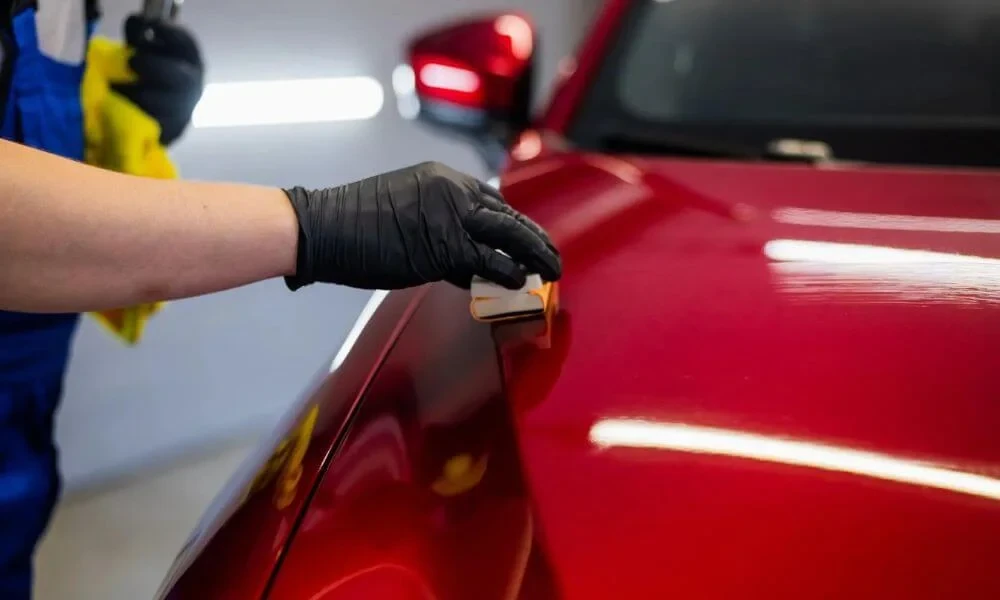
Paint protection film has moved from being a specialist product for exotic cars to a practical choice for everyday vehicles. Drivers now use it to protect new paintwork, preserve higher-value cars, and reduce the cosmetic damage caused by ordinary road use. Yet the growing number of films available has also made choosing the right one more complicated.
The best paint protection film is not simply the thickest product or the one with the most impressive specification sheet. A quality film needs to combine transparency, durability, flexibility, surface performance, and predictable installation. Understanding those qualities makes it easier to separate genuinely capable products from films that may look acceptable immediately after installation but perform poorly over time.
Why Optical Clarity Matters More Than It First Appears
Paint protection film is designed to protect a vehicle without distracting from its original appearance. For that reason, transparency is one of the first characteristics worth evaluating.
A good clear film should allow the depth, metallic flake, pearl effect, or gloss of the factory paint to remain visible. Poorer films may introduce slight cloudiness, texture, or distortion, particularly when viewed under bright lighting or across dark paintwork.
Optical quality becomes especially important when only selected panels are protected. If the bonnet, bumper, and mirrors have film while the doors remain uncovered, noticeable differences in clarity or gloss can make the installation easier to see.
Higher-quality films are engineered to create a more uniform surface so that protected and unprotected panels remain visually consistent. Although every installation can be detected under certain lighting conditions, good material should not make the car appear as though it is covered in plastic.
The Film Needs to Handle Real Road Conditions
Appearance matters, but protection is the reason PPF exists.
During normal driving, vehicle paint is exposed to small stones, road debris, grit, insects, branches, and other contaminants. Individual impacts may seem insignificant, yet thousands of miles of driving can leave a front bumper or bonnet covered with small chips and marks.
Paint protection film creates a sacrificial layer between these hazards and the painted surface. Instead of the factory clear coat receiving the initial impact, the film absorbs or distributes part of the force.
This does not mean PPF makes paint damage impossible. A sufficiently sharp or powerful impact can penetrate virtually any automotive film. The practical benefit is that many minor incidents that would otherwise mark the paint affect the replaceable protective layer instead.
Film quality influences how effectively that layer performs. Material needs sufficient toughness to resist damage while retaining enough elasticity to conform to curved panels and tolerate normal vehicle movement.
Self-Healing Technology Improves Long-Term Appearance
One of the most useful developments in modern paint protection film is the self-healing top layer.
Minor surface marks can appear during washing, drying, or routine contact with the vehicle. On suitable films, warmth allows the upper coating to recover from many light scratches and swirl-like marks. Heat may come naturally from warm weather or be introduced carefully during professional maintenance.
Self-healing should not be misunderstood as automatic repair for major damage. Deep cuts, punctures, or severe abrasion will not simply disappear. Its value lies mainly in helping the film maintain a smoother appearance after repeated exposure to minor surface contact.
The quality of the top coat matters because PPF remains permanently exposed to the environment. A film may have a strong polyurethane base but still age poorly if the upper surface stains easily, becomes rough, or loses its original finish.
For drivers comparing products, surface technology deserves nearly as much attention as the underlying film thickness.
Resistance to Yellowing Is Essential for Clear Film
Older paint protection films developed a reputation for turning yellow, particularly on white or light-colored vehicles. Modern materials have improved considerably, but resistance to discoloration remains an important quality indicator.
PPF faces ultraviolet radiation, temperature changes, moisture, pollution, cleaning chemicals, and road contamination throughout its service life. Lower-quality materials can gradually lose transparency or develop visible color changes.
A discolored film defeats part of the purpose of choosing transparent protection. Instead of preserving the factory appearance, it changes how the paint looks beneath it.
Quality films therefore use material formulations and top coatings designed to reduce UV-related degradation and environmental staining. Drivers in regions with intense sunlight should pay particular attention to this characteristic because long-term UV exposure can be particularly demanding on exterior materials.
Installation Characteristics Can Be Just as Important as Material Quality
Even an excellent film can produce disappointing results when poorly installed.
Modern vehicles contain complicated curves, vents, sensors, badges, panel gaps, and sharp body lines. PPF must stretch and conform around these features while remaining stable after installation.
Material that is difficult to work with may require excessive stretching, potentially affecting clarity or adhesive performance. Conversely, a film designed with suitable flexibility gives experienced installers more control when positioning it around complex panels.
Adhesive quality matters as well. The film must remain securely attached without creating unnecessary visual distortion beneath the surface. Clean preparation is critical because dirt, wax residue, loose contamination, or trapped particles can remain visible once the film is applied.
This is why product selection and installer selection should be considered together. Premium material does not compensate for rushed preparation or weak installation technique.
Coverage Should Match How the Vehicle Is Used
Choosing the best PPF also involves deciding how much of the vehicle actually needs protection.
For many daily-driven cars, the front end receives the greatest exposure to road debris. The bumper, bonnet, front wings, mirror caps, and sometimes the leading edge of the roof are common areas for protection.
Full-body coverage offers broader protection but requires a significantly larger investment. It may make sense for high-value vehicles, cars with expensive paint finishes, or owners who want consistent protection across every painted panel.
Partial installations can be equally sensible when the objective is simply to protect high-impact areas. The important consideration is matching the coverage to driving conditions rather than automatically assuming that more film is always necessary.
Motorway mileage, road quality, local climate, parking conditions, and how long the owner intends to keep the vehicle can all influence that decision.
Maintenance Has a Major Effect on Film Longevity
Paint protection film reduces certain risks, but it does not eliminate the need for proper vehicle care.
Regular washing prevents contaminants from remaining on the surface for long periods. Bird droppings, insect residue, tree sap, and other substances should generally be removed reasonably quickly rather than allowed to bake onto the film.
Aggressive polishing compounds and harsh chemicals should also be avoided unless they are specifically suitable for the installed material. Pressure washing requires sensible technique, particularly around exposed film edges.
Owners should follow the care instructions associated with their particular film because surface coatings and chemical tolerances can vary between products.
A well-maintained installation will usually look better throughout its useful life than one that is treated as completely maintenance-free.
Choosing a Film Requires Looking Beyond One Specification
Comparing PPF by thickness alone rarely provides enough information. Thickness can contribute to impact protection, but the overall product includes much more than the polyurethane layer.
Transparency, adhesive behavior, elasticity, stain resistance, surface smoothness, self-healing properties, UV stability, and compatibility with professional installation all contribute to real-world performance.
Warranty terms can provide additional context, although they should be read carefully. Buyers should understand what is actually covered, how long coverage lasts, and whether specific maintenance or professional installation conditions apply.
Product documentation is useful when comparing technical characteristics. For example, ClearPro provides information about its clear PPF film within its paint protection range, giving readers another reference point when evaluating the qualities available in modern transparent films.
The Best Protection Is the Film You Barely Notice
Good paint protection film works quietly. It should preserve the appearance of the underlying paint while taking on many of the minor hazards associated with everyday driving.
The strongest choices balance optical clarity with physical protection, surface durability, stable adhesive performance, and resistance to long-term discoloration. Installation quality and appropriate maintenance then determine how successfully those characteristics translate to the vehicle itself.
Rather than focusing on one impressive feature, drivers are better served by considering the complete system. When the film, installer, coverage level, and maintenance routine all suit the vehicle, PPF becomes less about changing how a car looks and more about helping its original finish stay that way.

Comments are closed.